The man who built Apple’s stores doesn’t buy Silicon Valley’s bet on AI shopping
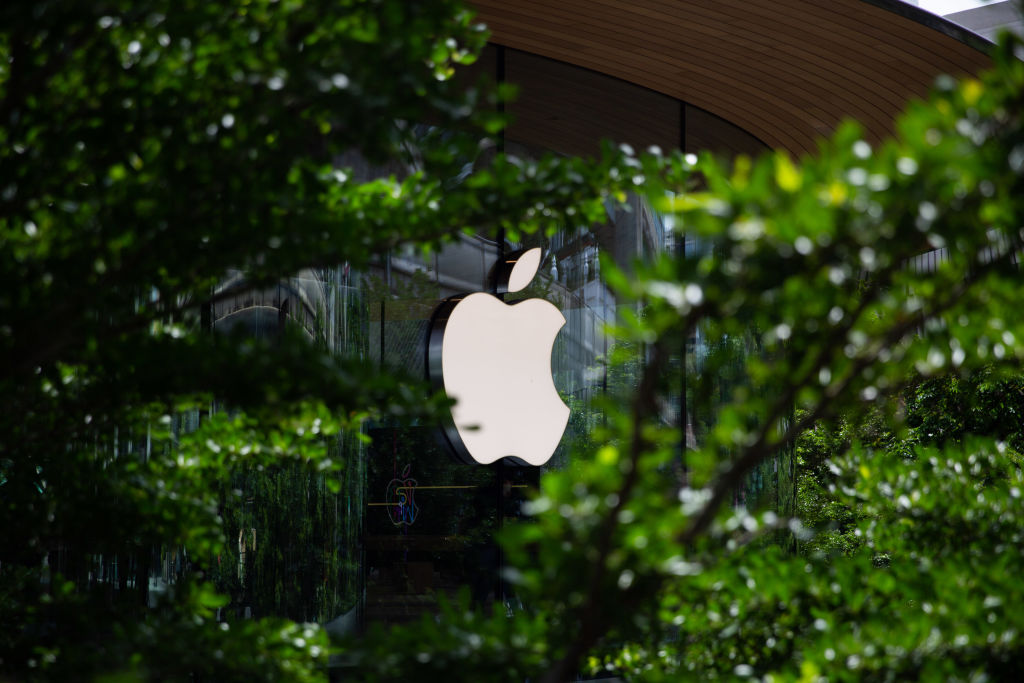
While Silicon Valley is spending billions to make AI agents shop for us, the man who pioneered Apple’s retail stores thinks the industry is overestimating how much of shopping people will hand over to machines — and believes physical stores will continue to thrive.
Ron Johnson, 66, has heard predictions about the demise of physical retail before. He joined Apple in 2000 to build its retail business as online shopping was beginning to take off, and went on to help create a store network that became central to how Apple sells its products and connects with customers.
“AI is a new technology that will improve the online shopping experience,” Johnson said in an interview. “But I don’t know that it’s going to change which way we shop.”
Johnson’s view comes as some of the world’s biggest tech companies are trying to push AI deeper into shopping, betting that agents can automate more of how we find and buy items — a concept commonly called agentic commerce . Google is making that push with its Universal Commerce Protocol , a standard designed to help AI agents take consumers from product discovery to checkout. OpenAI, meanwhile, is turning ChatGPT into a shopping destination where users can research, compare, and, in some cases, even buy products without leaving the chatbot.
Asked whether he could imagine someone letting an agent choose and buy a $1,000 or $2,000 laptop without ever visiting a website or store, Johnson was unequivocal: “Honestly, nobody’s going to do that.”
Buying a laptop, he argued, is too personal a purchase to simply delegate to an AI agent. Buyers want to feel its weight, see the display and decide which size works for them. AI may narrow the choices, Johnson told TechCrunch. He added that many consumers would still want to experience the product themselves before spending that kind of money.
“AI will never be able to have you physically experience a product,” Johnson said. Instead, he expects agents to better inform consumers before they walk into a store. “They’ll just become more informed shoppers when they come to the store.”
Johnson’s conviction stems from a decision Apple made more than two decades ago. Apple’s physical stores, he said, were designed not only as places to buy Macs, but also as places where people could try products, learn how to use them, and return for help when something went wrong.
Some of those bets are revisited in Shop Different: How Retail Revealed Apple’s Genius , Johnson’s new book about building Apple’s retail operations alongside Steve Jobs. Competitors, he said, borrowed Apple’s glass-heavy design, open layouts, and even versions of the Genius Bar, but often missed the people.
“The secret sauce for Apple has always been its people, the people in the store, and how they treat the customer,” Johnson said.
Apple Store employees are not paid on commission, Johnson said, unlike the sales culture common across much of retail. The idea, he said, was to remove the pressure to sell and instead have employees figure out what a customer actually needed.
After leaving Apple, Johnson took over J.C. Penney in 2011 with an ambitious plan to reinvent the struggling department-store chain. He was ousted less than two years later after sales plunged.
Johnson now says he tried to change too much, too quickly, without bringing employees and customers along. Apple’s stores had effectively been a startup that evolved alongside the company’s products. J.C. Penney, on the other hand, was a turnaround that required a different approach.
“I applied a startup mentality to what needed to be a turnaround transformation,” he recalled.
Johnson later returned to the startup world , founding Enjoy Technology, an e-commerce company that brought technology products and setup services directly to customers’ homes. The startup filed for bankruptcy in 2022 and sold substantially all of its assets to Asurion.
For all his skepticism about how AI will reshape shopping, Johnson remains bullish on the technology itself. “I’m a real believer in AI. I’m an AI optimist,” he said.
He believes Jobs would have embraced AI, too, but not as a substitute for human judgment. “There’s no substitute for human intuition,” Johnson said, recalling Jobs’ belief in bringing smart people together to debate problems and find new ways of looking at them.
When you purchase through links in our articles, we may earn a small commission . This doesn’t affect our editorial independence.

Jagmeet covers startups, tech policy-related updates, and all other major tech-centric developments from India for TechCrunch. He previously worked as a principal correspondent at NDTV.
You can contact or verify outreach from Jagmeet by emailing mail@journalistjagmeet.com . View Bio October 13 – 15 San Francisco Last day to book an exhibit table is September 18. Don’t miss out on high-impact leads, investor access, and a brand spotlight in Disrupt’s Expo Hall.
Tilly Norwood’s press tour is going about as well as you’d expect for an AI
A new kind of AI model from a ChatGPT inventor is thrilling developers
OpenAI caught its models leaving notes to successors to hide bad behavior
Microsoft exec called AI scraping ‘the largest theft of labor in human history,’ new unredacted filings reveal
Former Infosys chief’s AI startup nabs another $53M
Clean tech startup Fluxnium found a way to tap 50,000 years’ worth of nuclear fuel
Former TikTok execs built an app that uses AI to teach you how to pose for a photo
Verified source · TechCrunch
Reported by TechCrunch. Open the original for full media and formatting.
More in Product
All news Product
GM can’t ‘bring back’ Apple CarPlay because it never left
Last week, GM announced a new software experience for its upcoming Chevy Silverado and GMC Sierra trucks, including a new look for Apple CarPlay and Android Auto, the popular phone mirroring systems that the automaker made a big deal about removing from its electric vehicles in…
Read at The Verge Product
Can CEO John Ternus find Apple’s next big thing?
Today, I’m talking with Mark Gurman, who is the world’s best-sourced Apple reporter — both as Bloomberg’s chief Apple correspondent and the host of the upcoming podcast Power On. Earlier this month, Apple hosted its annual iPhone hardware event, virtually every detail of which w…
Read at The Verge Product
Apple’s clever software solution lets iPhone batteries skirt shipping limits
Apple has developed an unexpected workaround to prevent the iPhone 18 Pro Max from being hit by shipping restrictions on big batteries. There's a "battery-firmware solution" in place on the new iPhones, according to Apple's support page, which keeps capacity below the 20Wh limit…
Read at The Verge Product
Get a closer look at the iPhone 18 Pro’s mechanical camera
iFixit's latest device teardown shows us the inner workings of the new variable aperture lens inside Apple's iPhone 18 Pro and 18 Pro Max, alongside some repair concerns to be mindful of. The adjustable mechanical iris opens and closes magnetically, controlling how much light sh…
Read at The Verge